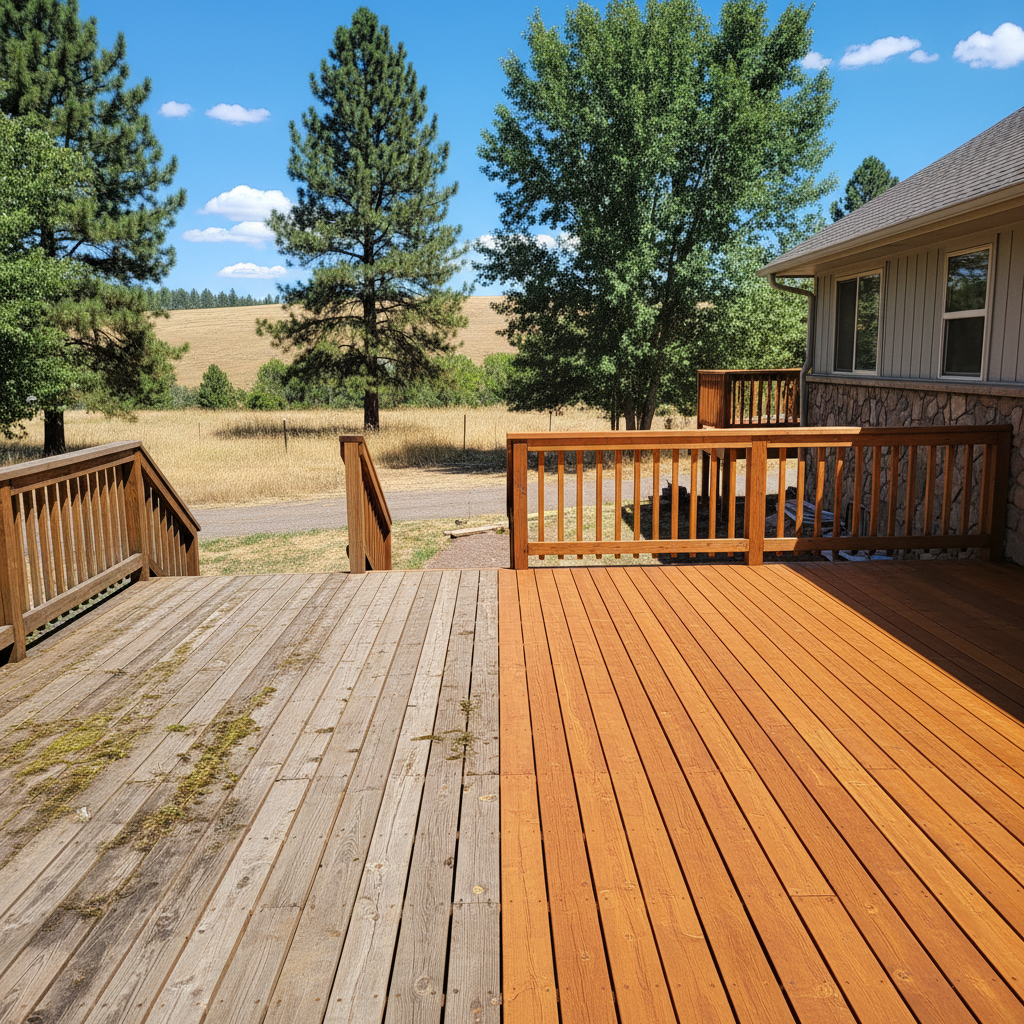
So, you're looking at staining your deck, and you've probably seen a million options at the hardware store. It usually boils down to two main types: solid stains and semi-transparent stains. Folks often ask me, "Which one's better?" The truth is, it depends on what you're starting with, what you want it to look like, and how much work you're willing to put in down the road. Let's get into it.
Solid Stains: The Paint-Like Protector
Think of solid stains as a thin coat of paint for your deck. They're opaque, meaning they completely cover the wood grain. If your deck's seen better days – maybe it's got some old, mismatched boards, or there's a lot of sun damage – a solid stain can be a real facelift. It hides imperfections beautifully, giving everything a uniform, fresh look. It's like putting a fresh coat of paint on a tired wall, but it's still designed to penetrate and protect the wood, not just sit on top.
Pros of Solid Stains:
- Maximum Coverage: Hides almost all wood imperfections, old stains, and color variations. Great for older decks.
- UV Protection: Because of the higher pigment content, solid stains offer the best protection against the sun's harsh UV rays. That's a big deal here in Spokane, especially with our bright summers that can really beat down on a deck.
- Color Variety: You've got a huge palette to choose from, just like exterior paint. You can match your house trim or go for a bold new look.
- Durability: Generally, solid stains are tough. They form a robust film that stands up well to foot traffic and weather.
Cons of Solid Stains:
- Hides Wood Grain: If you love the natural look of wood, this isn't for you. It covers it completely.
- Prep Work is Key: Any peeling or flaking from previous coatings will show through if you don't prep properly. This often means more sanding or stripping.
- Can Peel: While durable, if moisture gets trapped underneath or the surface wasn't prepped perfectly, solid stains can sometimes peel or chip, especially on horizontal surfaces that get a lot of water.
Semi-Transparent Stains: Enhancing Natural Beauty
Semi-transparent stains are a different beast. They have less pigment, so they allow some of the wood grain and natural color to show through. They tint the wood rather than covering it completely. If you've got a newer deck, or a deck made of beautiful cedar or redwood that you want to show off, this is often the way to go.
Pros of Semi-Transparent Stains:
- Highlights Wood Grain: This is the main appeal. You get to see the natural beauty and character of the wood.
- Easier Maintenance: When it's time to re-stain, semi-transparent stains usually don't peel. They just fade over time. This means less scraping and sanding – often just a good cleaning before applying a new coat.
- Penetrates Deeper: These stains tend to soak into the wood more, offering protection from within.
Cons of Semi-Transparent Stains:
- Less UV Protection: With less pigment, they don't block as much UV light as solid stains. Your deck might fade or gray a bit faster, especially if it's in direct sunlight all day.
- Won't Hide Imperfections: Every knot, every ding, every color variation will still be visible. If your deck isn't in great shape, a semi-transparent stain might highlight its flaws.
- Fewer Color Options: You're usually limited to natural wood tones or subtle tints.
Cost, Durability, and Maintenance: What to Expect
When it comes to cost, the materials for solid and semi-transparent stains are often pretty similar per gallon. Where the cost can differ is in the labor, especially if you're hiring Spokane House Painters. Solid stains, particularly if there's old, peeling material, often require more intensive prep work – stripping, sanding, and cleaning – which adds to the labor time and therefore the overall cost.
Durability-wise, solid stains typically last longer in terms of film integrity, maybe 3-5 years before needing a refresh. Semi-transparent might need reapplication every 2-3 years to maintain its color and protection, especially with our Spokane weather swinging from hot summers to snowy winters. The big difference is that when a solid stain fails, it often peels, requiring significant prep to fix. When a semi-transparent fades, you can often just clean it well and apply another coat. Less hassle, usually.
Here in Spokane, we get a lot of sun in the summer and plenty of moisture in the winter. That's a tough combination for any deck. For decks that get full sun exposure, especially those facing south or west, a solid stain will generally give you better UV protection and keep your wood from graying out as fast. If your deck is newer, made of nice wood, and you're good with a bit more frequent maintenance, a semi-transparent can really make it pop. I've seen plenty of beautiful cedar decks in the South Hill area that look fantastic with a semi-transparent finish, really letting that grain shine.
My Recommendation for Spokane Homeowners
If your deck is older, has some blemishes, or you want the absolute longest protection from the sun and weather, go with a solid stain. You'll get a beautiful, uniform finish that's tough as nails. Just make sure the prep work is done right. If you've got a newer deck, or you love the natural look of your wood and are okay with a bit more frequent, but easier, re-application, a semi-transparent stain is a fantastic choice.
Ultimately, the best stain is the one that fits your deck's condition, your aesthetic preferences, and your willingness to maintain it. Don't hesitate to ask for samples – seeing it on your actual deck in your light conditions makes a huge difference. And if you're not sure, give us a call at Spokane House Painters. We're happy to take a look and give you an honest opinion on what'll work best for your home.